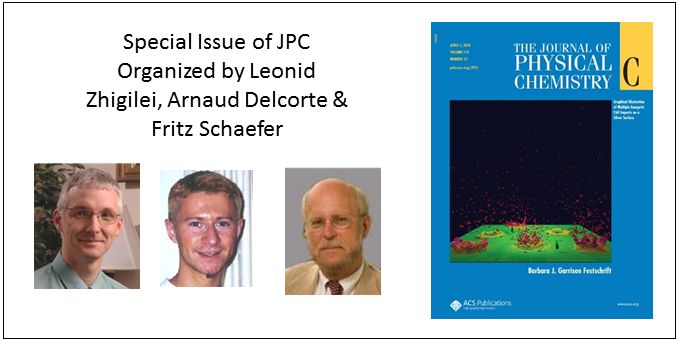
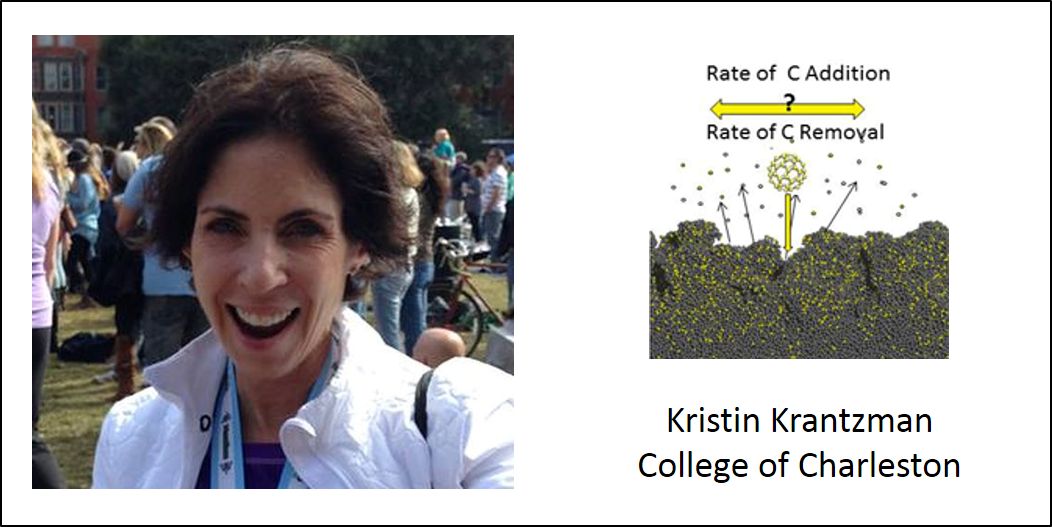
The overall goal of the group research is to model realistically the reactions and interactions of molecules at surfaces with two emphases. First, we want the model to be sufficiently accurate so that direct comparisons to experimental data can be made. Second, the models should yield microscopic pictures not available from experimental data. When both of these conditions are met, then it has been possible to suggest new experiments to perform. Recently, the group has been developing coarse-grained mesoscopic models in order to expand the time and length scale of both the ablation and sputtering simulations
Specific modeling projects include as follows:
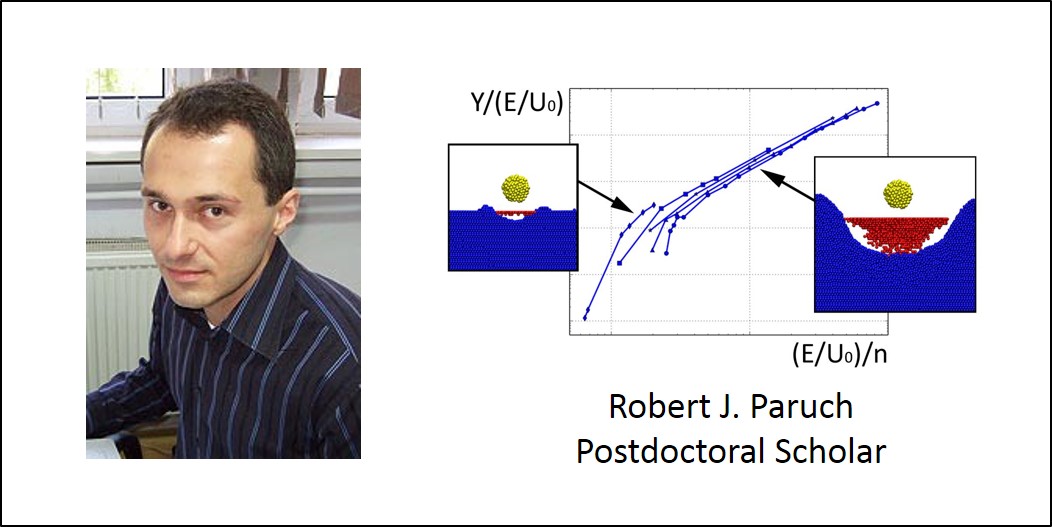
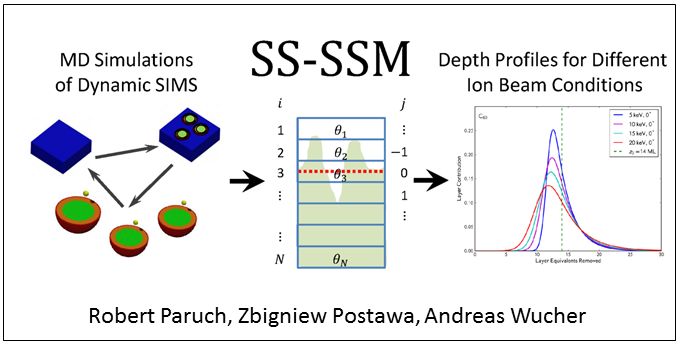
- Sputtering-Energetic cluster bombardment of solids. Development of simple models to describe the mesoscale phenomena. Direct comparisons are made to data from secondary ion mass spectrometry (SIMS) experiments. The current emphasis is on an accumulated simulation protocol for modeling sequential bombardment events.
- Modeling analyte emssion in matrix assisted laser desorption ionization (MALDI) mass spectrometry. The goral is to understand how the nalyte molecule frees itself from the matrix molecules.
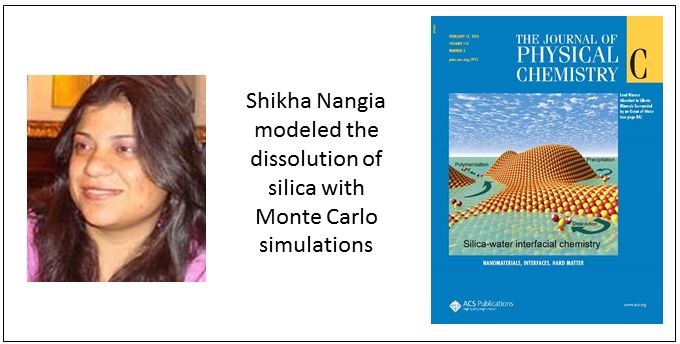
- Mineral-water interfaces: Hydrogen bonding interactions of water on hydroxylated silica surfaces are studied using molecular dynamics simulations to address issues related to silica-water surface chemistry and dissolution. A large set of silica surfaces are generated along several low miller index planes, and based on the polymeric states of surface silicon atoms and the topological features of the arrangement of the surface hydroxyls the surface properties are explored
- Cyberinfrastructure: Tools are being developed to access databases and digital libraries for environmental kinetics. The goal of our efforts is the development of software to collect, analyze, and distribute data to scientists working on environmental chemistry problems.